
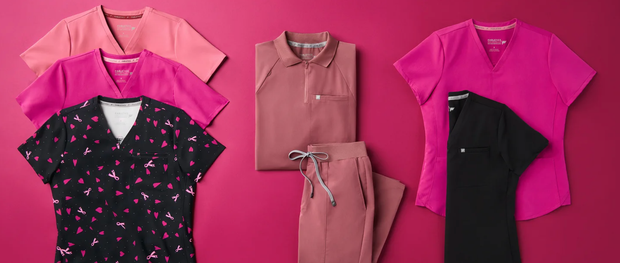
How Scrubs Should Fit
Scrubs should feel comfortable, look polished and stay out of your way. That means finding the right size and silhouette—not expecting one standard fit to work for everyone.
Scrubs should fit close enough to move with you through a full shift without pulling, gaping or restricting your reach and loose enough that the fabric doesn't bunch or catch when you bend, lift or kneel. The size on the tag is only a starting point. Shoulders, rise, length and waistband behavior tell you whether the fit actually works.
Use this guide to check how scrub tops and pants should fit, then find the Fabletics Scrubs options that match what you want—a slim or relaxed set, a closer jogger silhouette, built-in bra support or an easy layer.
Quick Fit Map
- Best Slim-Fit Set: Method 2-Pocket Scrub Top + Ion Scrub Pant
- Best Relaxed-Fit Set: Evolve Oversized Scrub Top + High-Rise Wide Leg Scrub Pant
- Best Set for a Closer Surgical-Setting Fit: Vital 1-Pocket Scrub Top + High-Rise On-Call Scrub Jogger
- Best Built-In Bra Scrub Top: 360° Built-In Bra Scrub Top
- Best Under-Layer: Core Long-Sleeve Underscrub
- Best Over-Layer: Pace Knit Scrub Jacket
Fit Checkpoints: Shoulders, Waist, Rise and Length
The best way to check scrub fit is to move in it. Stand, reach overhead, cross your arms, sit, bend and walk. Your scrubs should stay in place and feel comfortable through all of it.
Shoulders and Sleeves
The shoulder seam of a scrub top should sit at the edge of your shoulder, where the shoulder begins to curve into the upper arm. If the seam pulls toward your neck, the top is likely too narrow. If it drops far down the arm on a style that isn't intentionally oversized, the top may be too large.
Raise both arms forward and overhead. The neckline should stay flat and the hem shouldn't need to be pulled back down. Sleeves can sit closer on an underscrub, but they shouldn't pinch, twist or limit your reach.
An oversized top follows a different visual rule: a dropped shoulder can be intentional. The fit still fails if extra fabric bunches under a jacket, catches when you reach or shifts the neckline.
Waist and Rise
Scrub pants should stay in place without relying on constant tightening. Check the waistband when you stand, sit and bend. It should feel secure enough that the back doesn't gap, but it shouldn't roll, dig or leave you waiting to untie it at the end of the day.
Rise changes where that support lands. A high rise can feel more anchored, while a mid rise may suit a shorter torso or anyone who dislikes pressure above the natural waist. The better rise stays put without compressing your abdomen when you sit.
The crotch should sit close enough to avoid hanging fabric, but not so high that seams pull when you squat or step up. Diagonal drag lines from the crotch toward the hip usually signal tension. A low, sagging rise can create its own problem by limiting stride and adding fabric where you don't need it.
Length and Leg Opening
Straight-leg and wide-leg pants should clear the floor in your work shoes. The hem can meet the shoe, but it shouldn't drag, pool or slip under your heel.
Jogger-style scrub pants should finish at the ankle with the cuff sitting flat. If the cuff climbs your calf every time you sit or the knee stays permanently bunched, try a longer inseam or a different cut. If the cuff collapses over the shoe, the inseam is too long.
A slim leg should follow your shape without gripping the thigh, knee or calf. A relaxed leg can add room, but it should hang cleanly. Every cut should allow a full stride, stairs and a squat without pulling behind the knee.
Fabric and Construction That Affect Fit
Size determines how much room a garment starts with. Fabric and construction determine whether that room still works several hours later.
- Stretch and recovery: Four-way stretch helps fabric move across both directions, which matters when you reach, bend and rotate. Recovery is what helps the garment return to shape instead of staying bagged at the knees or elbows.
- Waistband design: Elastic adds give, while an adjustable drawcord lets you fine-tune security. The waistband should distribute pressure rather than concentrating it in one narrow line.
- Seam placement: Side seams and contoured seams can shape a closer fit. No seam should land where it rubs through repeated motion or pulls against your range of movement.
- Pocket construction: A pocket changes fit once you fill it. Load your usual phone, badge, shears and pens before deciding. A top that fits empty but gapes under the weight of your tools isn't the right fit for your shift.
- Stitching and reinforcement: High-motion and high-load areas need to hold their shape. Check the crotch, pocket openings and side seams for pulling before you commit to a size.
Our featured MotionTech™ scrub tops and pants use breathable, lightweight four-way stretch with a wrinkle-resistant finish. The fabric is composed of 75% polyester, 19% viscose and 6% elastane. MotionTech™ also surpassed our 50-wash performance test for fading, shrinking and pilling. That construction supports consistent fit, but it doesn't replace choosing the right size and silhouette.
MotionTech™ Fabric and Care Details
MotionTech™ is made of 75% polyester, 19% viscose and 6% elastane. All Fabletics' Scrubs featuring MotionTech™ include breathable four-way stretch, a lightweight feel, wrinkle resistance, anti-fade, anti-pilling, anti-shrink and durable water-repellent technology. Follow the care label on each garment.
Fit by Style: Jogger, Slim and Relaxed Cuts
The right cut depends on where you want structure and where you want room.
- Jogger-style scrubs: A tapered leg and ankle cuff keep the hem contained. Look for enough room through the hip and thigh, then make sure the cuff stays flat as you sit and walk.
- Slim-fit scrubs: A closer top and narrower pant create a more tailored line. Stretch is essential because the silhouette has less spare fabric to absorb reaching, squatting and rotation.
- Relaxed-fit scrubs: More room through the body or leg can feel easier across a long shift and accommodate a thin base layer. Extra volume still needs control at the neckline, waistband and hem.
Jogger-style scrub pants taper toward the ankle, while relaxed-fit scrub pants keep more room through the leg; slim-fit scrub pants sit closer through the hip and thigh without restricting movement. The silhouette changes, but the standard doesn't: your scrubs should stay put without making you feel held back.
Fabletics Scrubs Picks by Fit Need
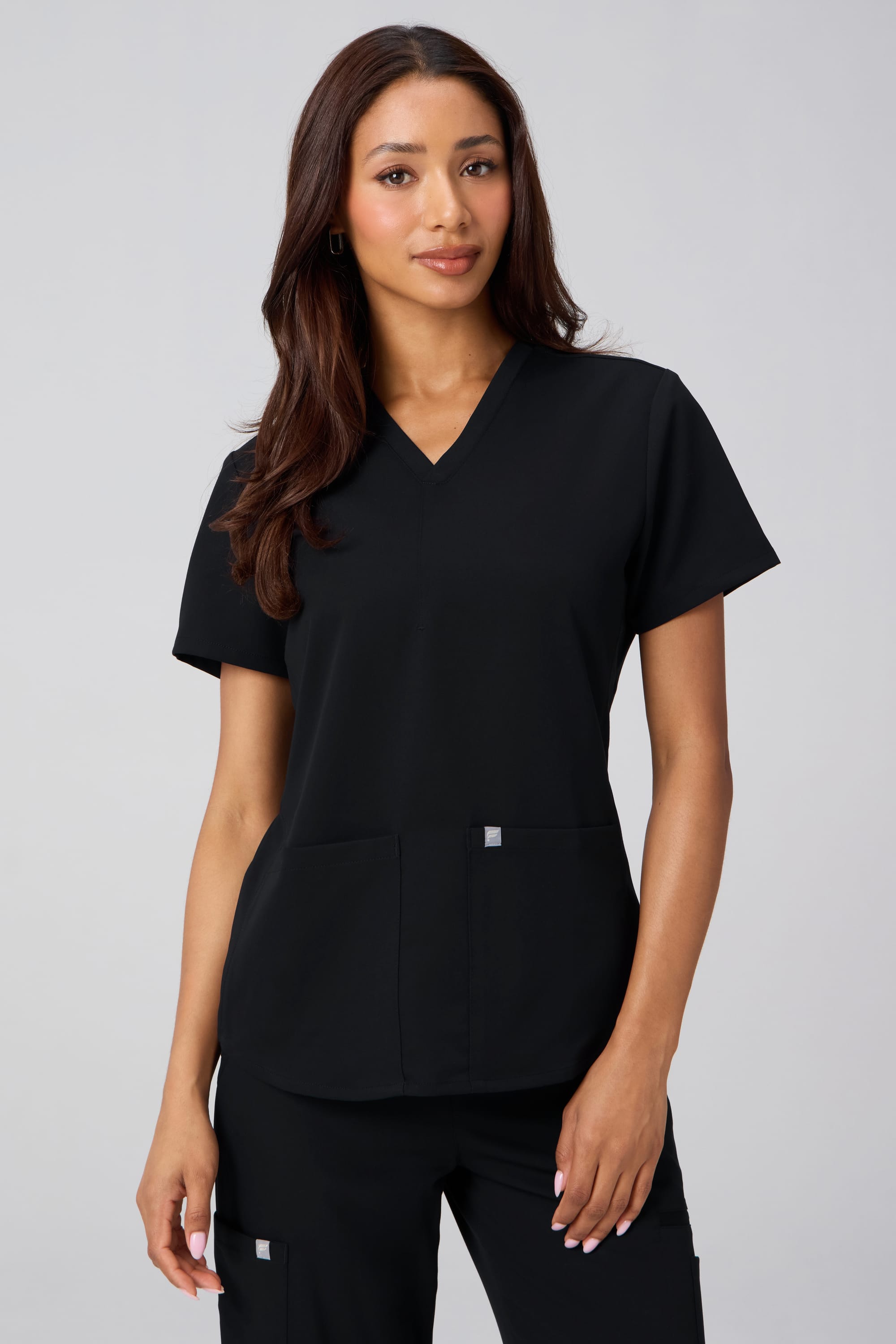
Best Slim-Fit Scrub Set for a Tailored Fit: Method 2-Pocket Scrub Top + Ion Scrub Pant
The Method 2-Pocket Scrub Top and Ion Scrub Pant create our clearest tailored pairing. The Method adds side seams for shape and front storage, while the Ion keeps the leg straight and the waistband adjustable.
A slim-fit scrub set should look closer, not feel smaller. On the Method, the shoulder seam should land at the shoulder edge and the front should stay flat after you load the pockets. On the Ion, you should be able to squat without pressure across the thighs or crotch. If you get the polished line only by giving up range of motion, the size is wrong.
The Method is offered in regular and petite fit options, while the Ion is available in short, regular and tall inseams plus mid- and high-rise choices. Use those options to refine proportion before sizing the entire set up or down.
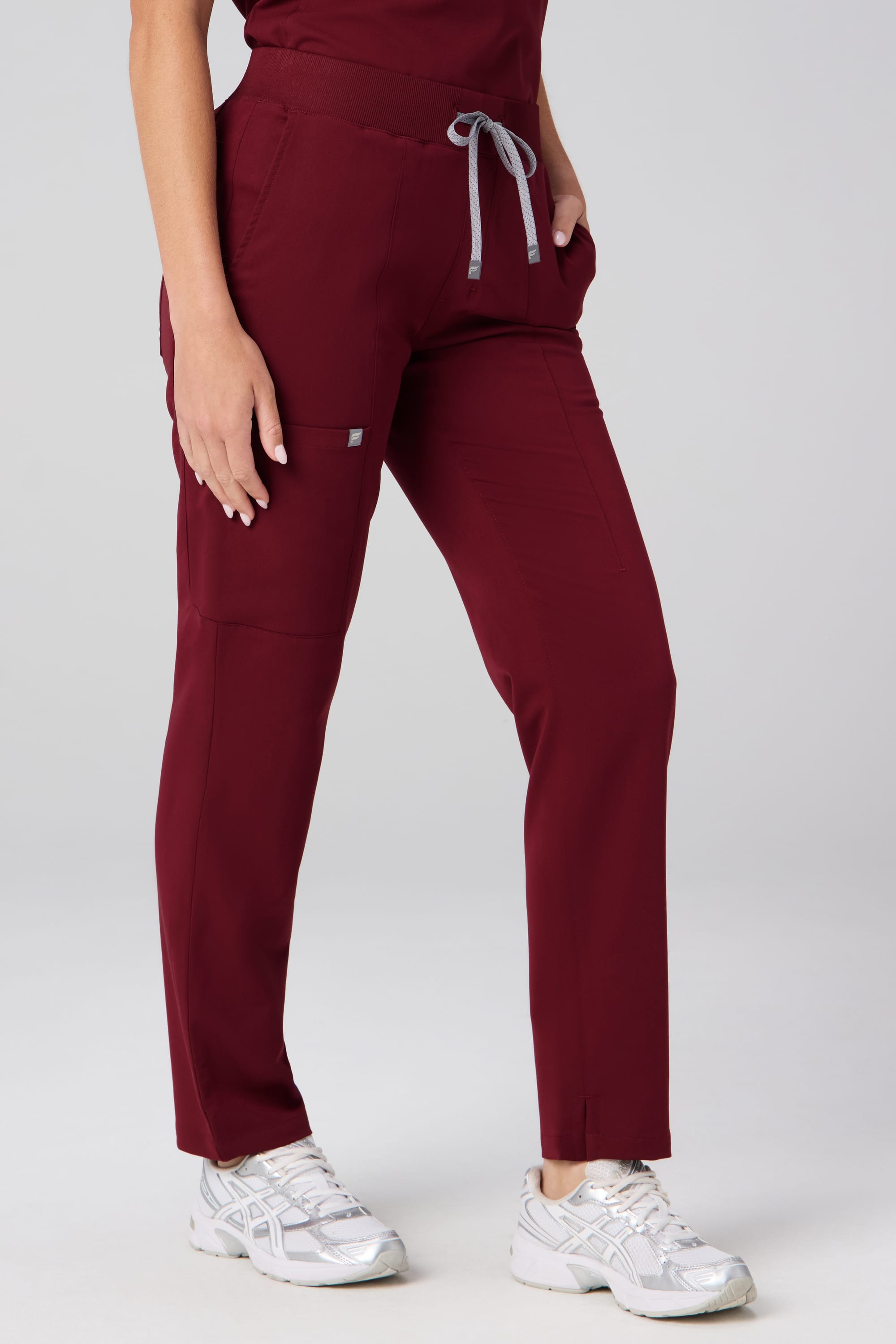
Best Relaxed-Fit Scrub Set for All-Day Comfort: Evolve Oversized Scrub Top + High-Rise Wide Leg Scrub Pant
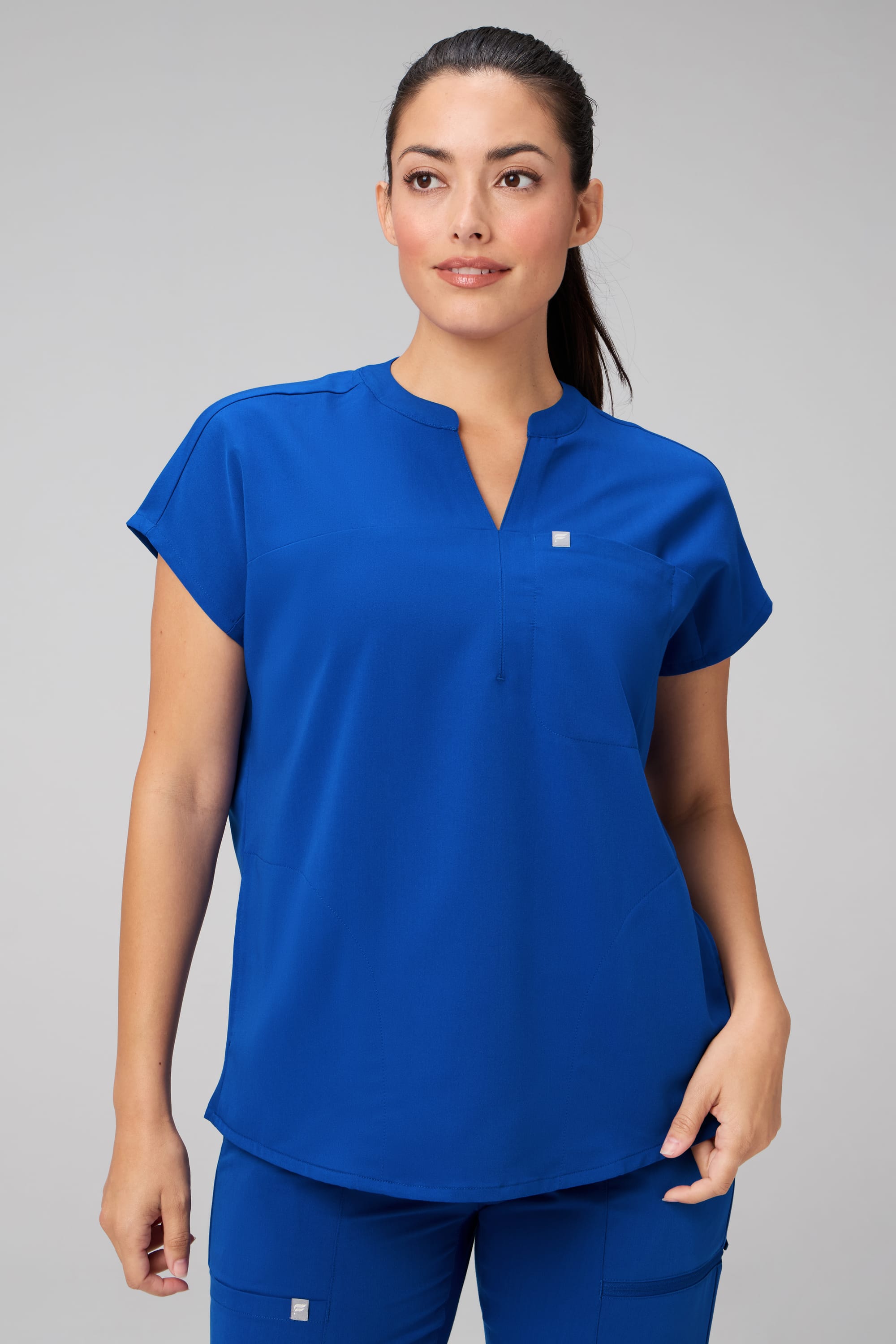
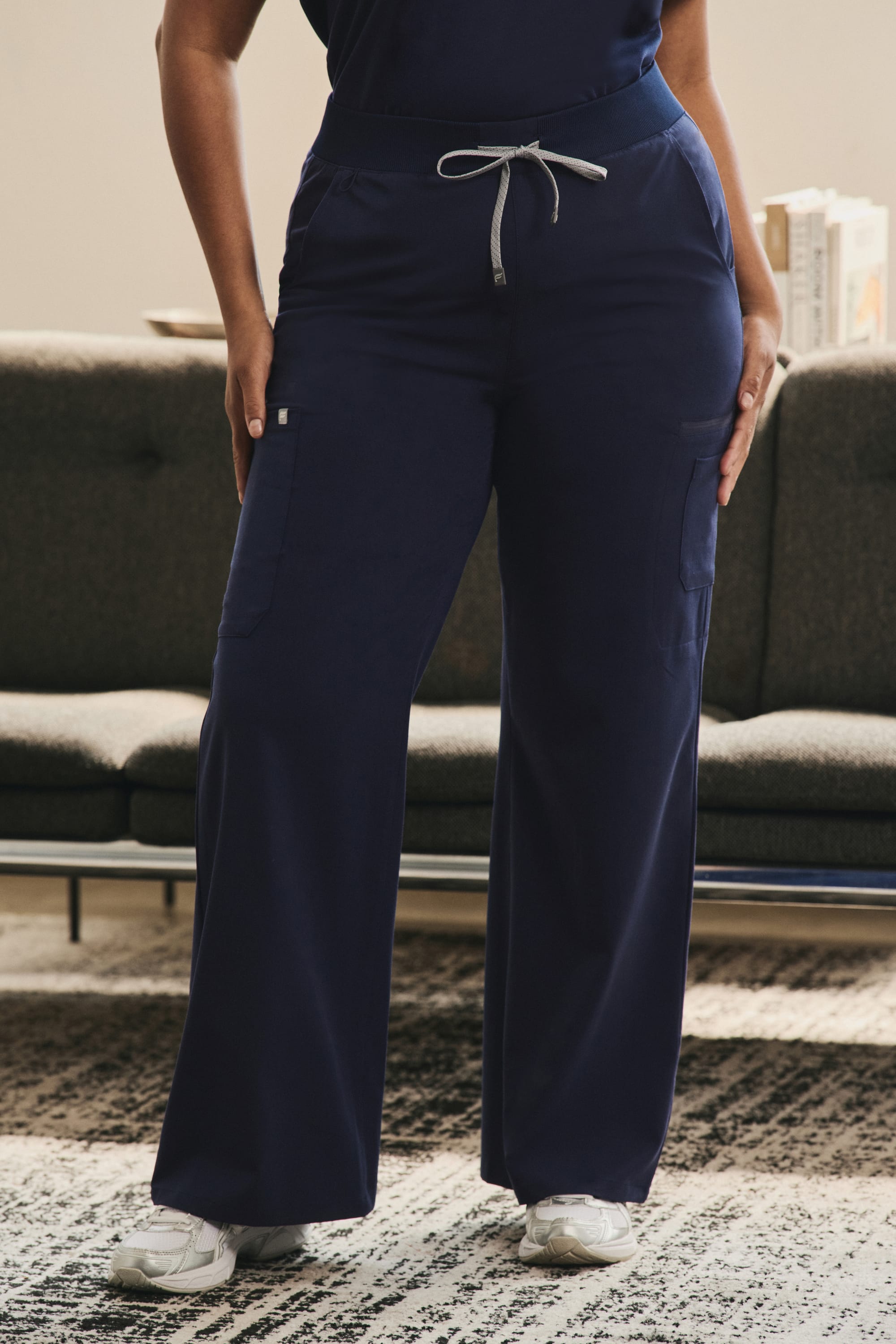
The Evolve Oversized Scrub Top and High-Rise Wide Leg Scrub Pant give you more room above and below the waist. The Evolve features a relaxed, oversized fit with a mandarin collar and three hidden pockets. The pant pairs a tailored high-rise waist with a relaxed wide leg, so the shape stays defined where it needs to stay secure and opens through the leg.
Extra room is useful when you prefer less contact through the torso, hip and thigh or want space for a thin under-layer. It shouldn't mean excess fabric everywhere. Check that the collar stays flat, the top doesn't slide forward when the pockets are loaded and the wide-leg hem clears the floor. At the waist, use the drawcord to secure the pant without cinching it into folds.
This set has more visual volume than a traditional straight-leg uniform. Confirm that the collar and wide-leg silhouette work with your employer's dress code before choosing it for your main rotation.
Best Set for a Closer Surgical-Setting Fit: Vital 1-Pocket Scrub Top + High-Rise On-Call Scrub Jogger
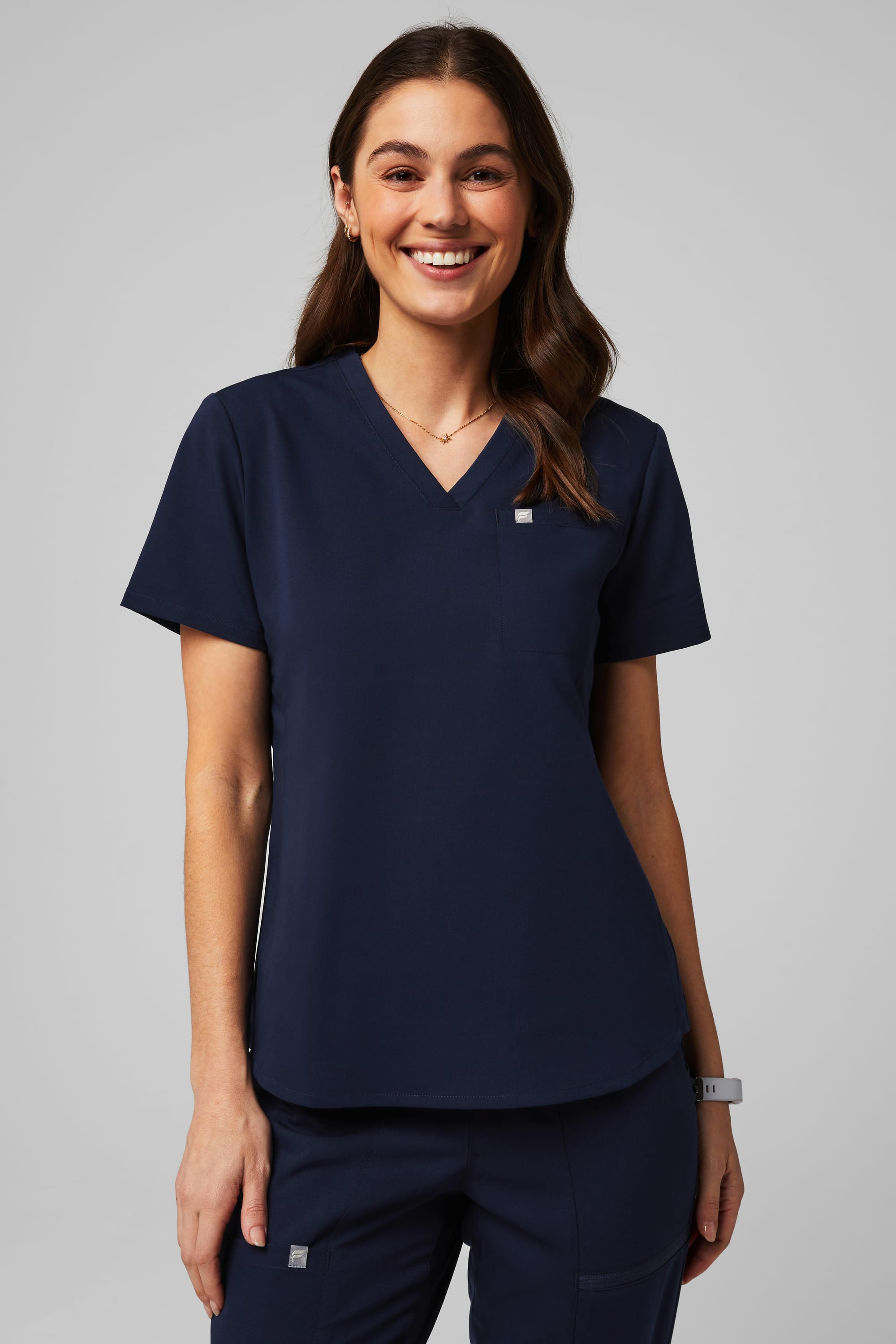
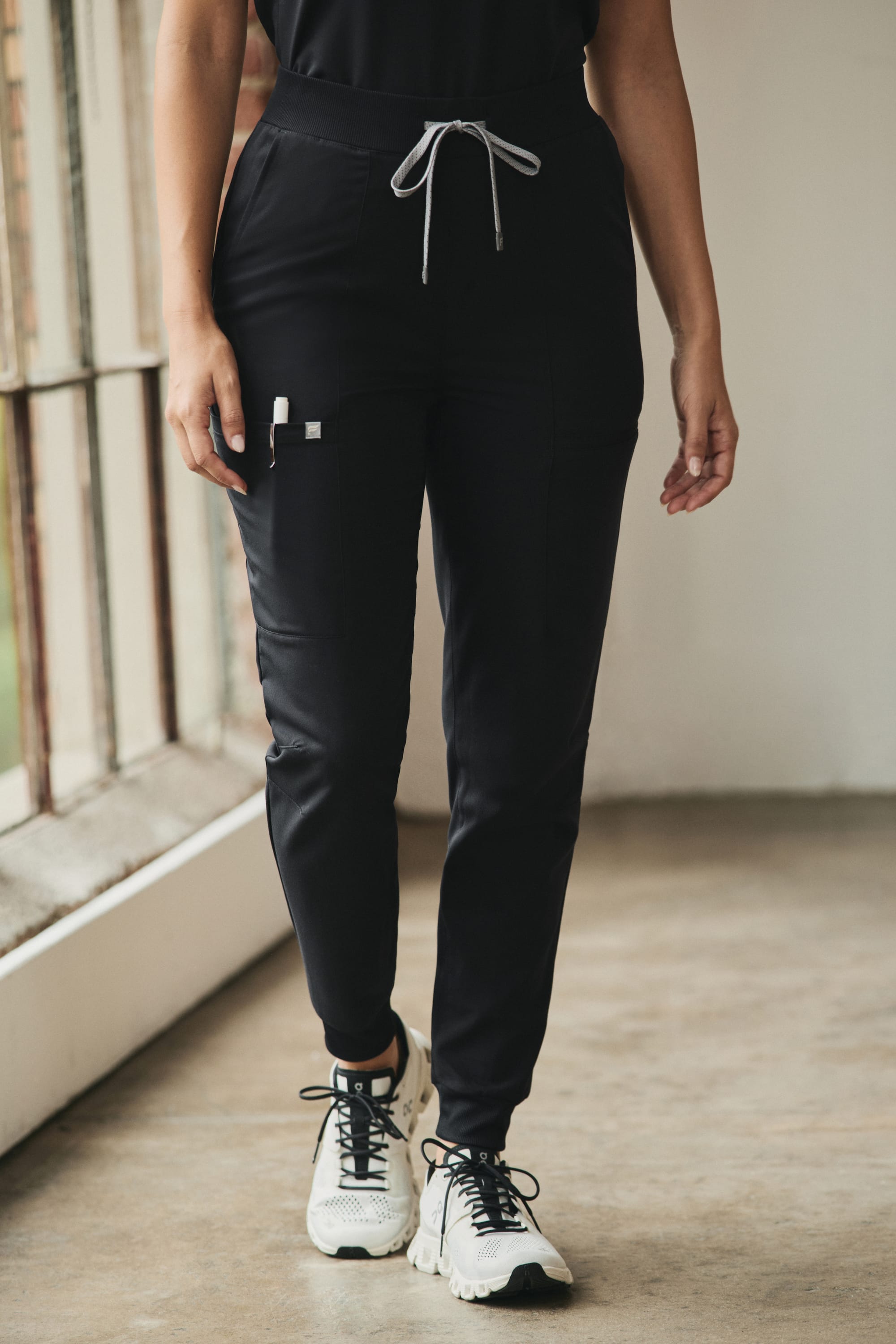
For a closer, more contained starting point, pair the Vital 1-Pocket Scrub Top with the High-Rise On-Call Scrub Jogger. The Vital uses a semi-slim, tuckable V-neck silhouette with tailored side seams and one chest pocket. The On-Call Jogger continues that closer line with a semi-slim fit, soft rib ankle cuffs and our Signature Stay-Put Waistband, which combines elastic ribbing with an adjustable drawcord.
That combination keeps the profile closer to the body than an oversized top and wide-leg pant. The top should tuck without ballooning or pulling out when you reach. The waistband should remain secure as you change position and the ankle cuffs should sit flat without climbing your calf or collapsing over your shoe.
The On-Call Jogger has six pockets, including cargo placements, so confirm that the pocket configuration and jogger silhouette meet your workplace's requirements. Surgical attire is governed by the healthcare organization's dress code, laundering rules and requirements for restricted areas. Some settings require facility-issued garments or specific protective layers. Treat this pairing as a fit reference only after your workplace approves the garments. A closer silhouette doesn't make a retail scrub set appropriate for every operating room.
Best Built-In Bra Scrub Top: 360° Built-In Bra Scrub Top
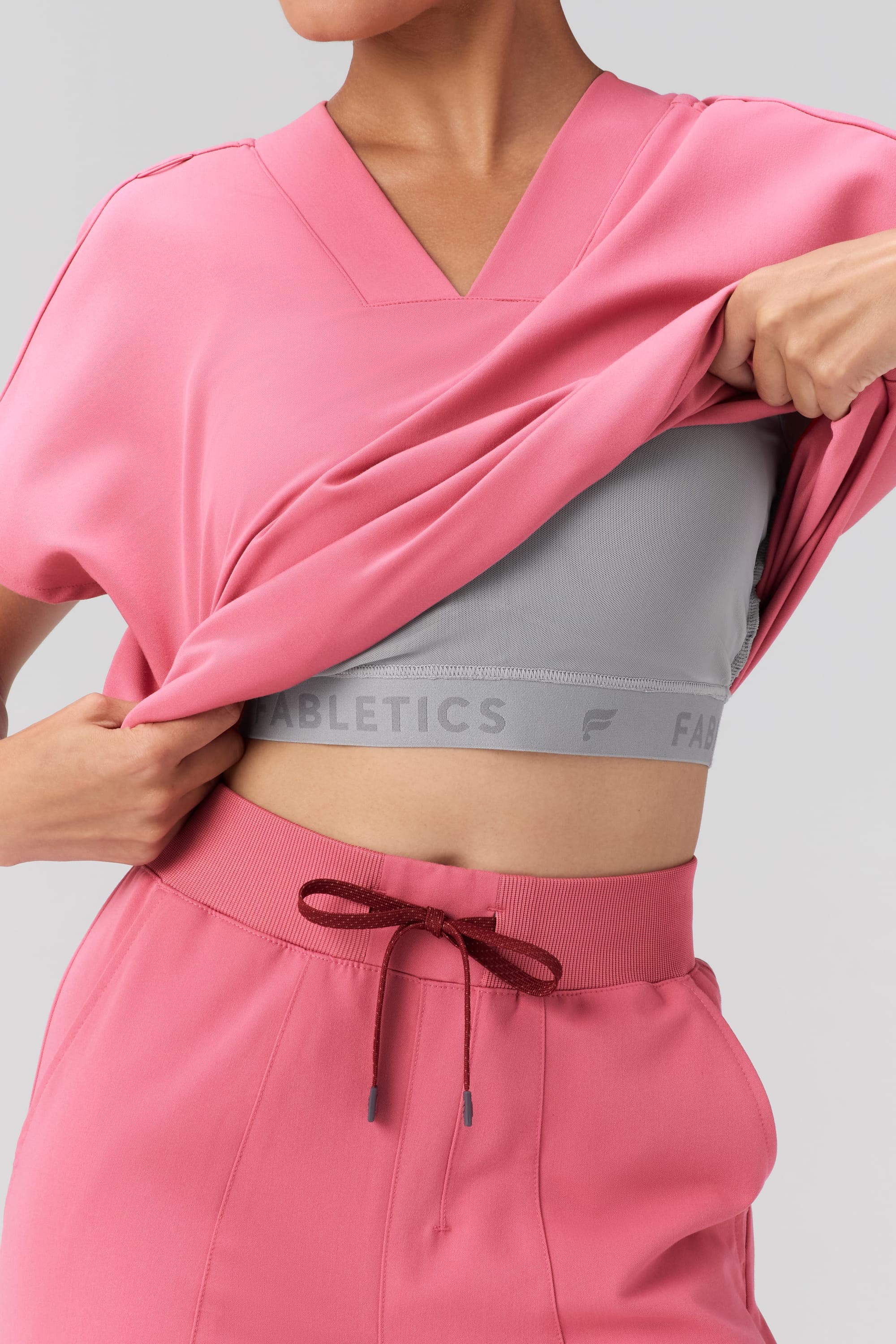
The 360° Built-In Bra Scrub Top is our pick when you want built-in bra support without adding another layer. The top combines an oversized fit with a built-in sports bra that offers medium support and stay-put cups. Hidden pockets keep the exterior clean, while breathable four-way-stretch MotionTech™ gives the outer top room to move through a long shift.
The band should sit level without riding up, the cups should stay in place when you reach and the shell shouldn't pull against the built-in layer. The outer top needs room to move without bunching under a jacket.
This style differs from standard Fabletics sizing, so don't carry over your usual size without checking the guide. Built-in support is also personal. If your preferred support level or workplace requirements call for a different bra, a separate scrub top may be the better fit.
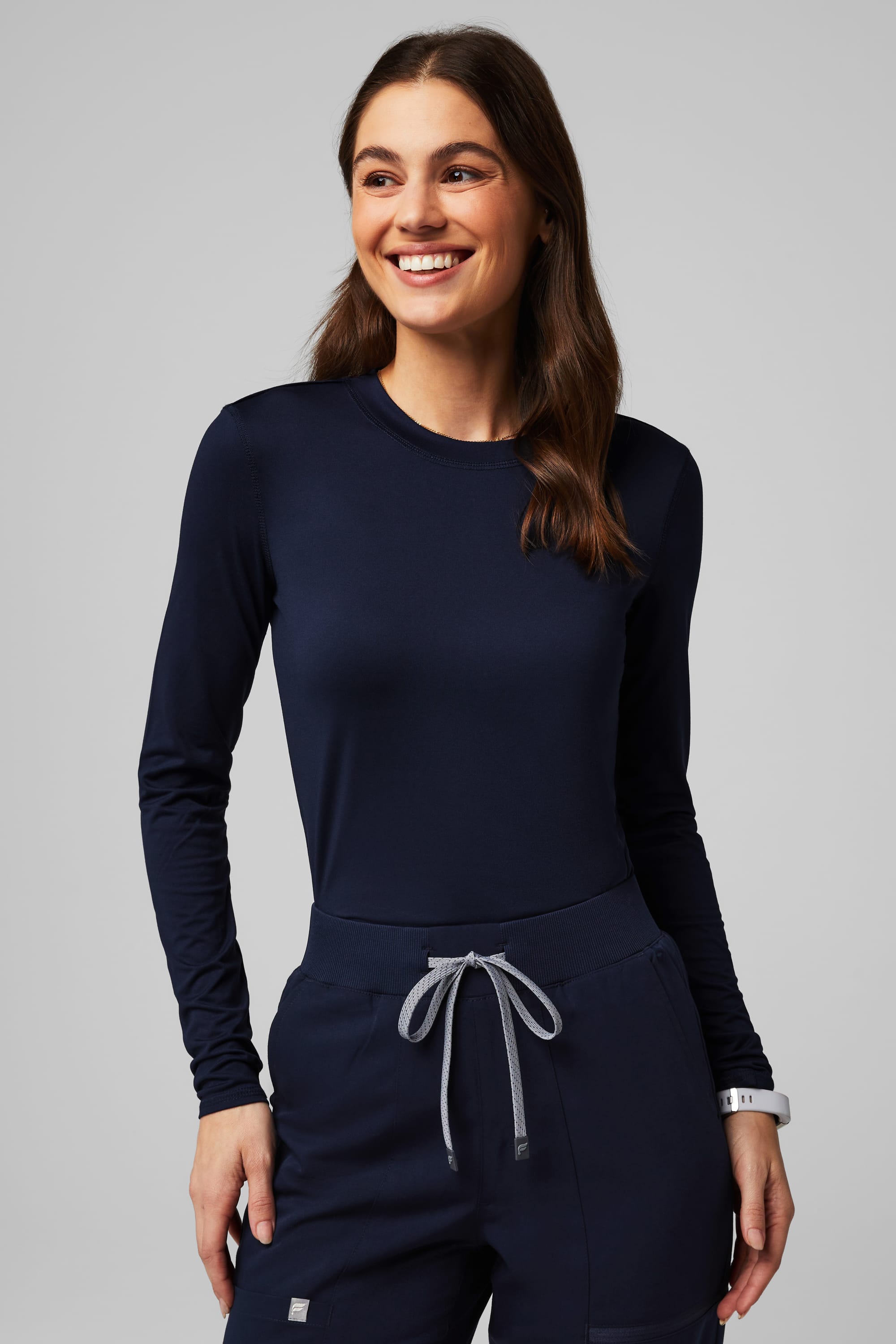
Best Underscrub Top for Layering: Core Long-Sleeve Underscrub
The Core Long-Sleeve Underscrub is the base layer for readers who want more coverage or warmth without turning the outer scrub top into a size larger than it needs to be. Its semi-slim fit, lightweight feel, moisture-wicking finish and four-way stretch are designed to sit close to the body.
An underscrub should lie flat at the shoulders, underarms and waist. Reach forward and overhead before adding the scrub top. If the base layer rides up, twists at the sleeve or creates thick folds at the elbow, it will only become more distracting under another garment. Once layered, repeat the same movement test and make sure the outer top still hangs cleanly.
This style differs from standard Fabletics sizing, so use the product's size guide. The product page also contains a fabric-naming conflict: the description names Dry-Flex while the fabric module names MotionTech™. The performance features are usable, but the proprietary fabric name needs confirmation before publication.
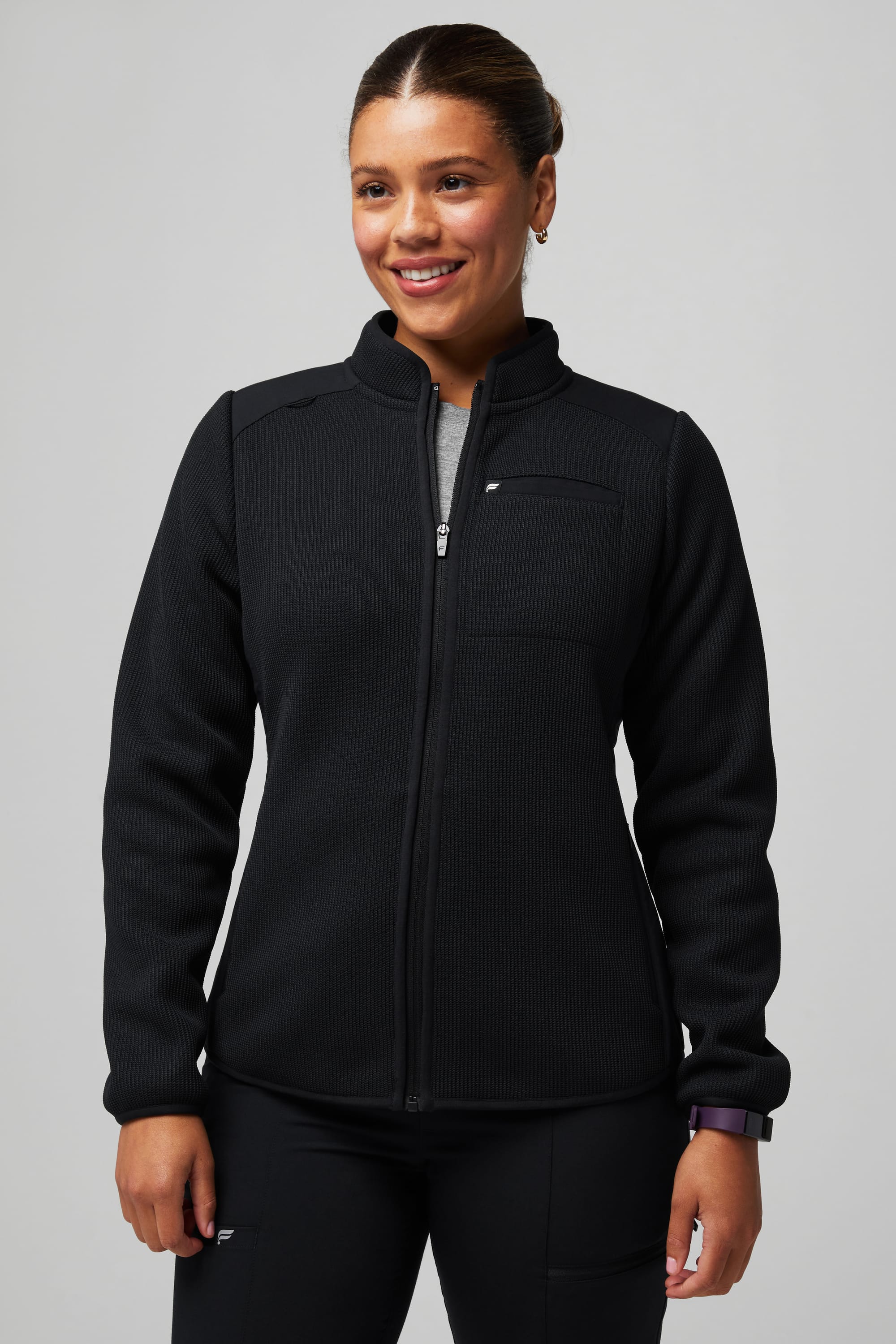
Best Scrub Jacket for Layering: Pace Knit Scrub Jacket
The Pace Knit Scrub Jacket adds warmth, stretch and storage without giving up a work-ready shape. Essential Knit delivers four-way stretch and weightless warmth, while six pockets include zip, hidden side and interior placements. The semi-slim fit keeps the jacket polished over a scrub top.
Fit the jacket over the exact layers you'll wear, not over a T-shirt at home. Zip it, cross your arms and reach overhead. The front should close without pulling across the chest, the sleeves should end at the wrist and the shoulder should move without lifting the whole jacket. Your loaded pockets shouldn't drag the hem or make one side hang lower.
Signs Your Scrubs Fit Right—or Don't
Scrubs fit right when you can stop thinking about them. Use this checklist at the start of a shift and again after several hours.
Signs the fit is working:
- The shoulder seam lands where the shoulder curves into the upper arm.
- The neckline stays flat when you bend and reach.
- The top hem returns to place without being pulled down.
- The waistband stays level and secure when you sit, stand and squat.
- The rise doesn't sag or pull into the crotch.
- The knees and hips move without strong drag lines.
- The hem or cuff stays clear of the floor and heel.
- Loaded pockets don't pull the garment out of position.
Signs the fit needs another size or cut:
- The fabric pulls across the chest, upper back, hips or thighs.
- The neckline gaps when you lean forward.
- The waistband rolls, digs, slides or needs constant tightening.
- The rise restricts your stride or hangs too low.
- The pant twists around the leg or bunches behind the knee.
- The hem drags or the jogger cuff climbs the calf.
- Pocket weight changes how the garment hangs.
- You keep adjusting the same area throughout the day.
One failed checkpoint doesn't always mean the whole size is wrong. If the shoulders fit but the body feels too full, try a slimmer cut. If the waist fits but the hem drags, change the inseam instead of sizing down. Fit problems are often proportion problems, and the right option solves the specific point that isn't working.
How to Choose Your Scrub Size
Start with your current bust or chest, waist, hip and inseam measurements, then compare them with the size guide for the exact style. Measure over the undergarments or base layers you expect to wear. Don't use an old size as a substitute for a current measurement.
Choose the top and pant separately. A matched color doesn't require one matched size. Fit the top to your shoulders, chest and reach. Fit the pant to your waist, hip, rise and inseam. Then choose the silhouette—slim, jogger or relaxed—that gives you the amount of room you prefer.
If you're between two scrub sizes, choose the size that fits your least-forgiving measurement and preserves full movement; use the larger size for layering or extra ease and the smaller size only when the size guide and stretch construction support a closer fit. If neither size passes the movement test, change the cut instead of forcing the size.
Fit can change after repeated wear if a garment is cared for incorrectly. Follow the label for the exact fabric and style, remove a garment from rotation if seams or elastic stop recovering and remeasure if a once-reliable fit begins to pull or sag. MotionTech™ is designed to resist fading, shrinking and pilling, but correct care still protects the fit you chose.
Extended Scrub Sizing Check
Measure bust or chest at the fullest point, waist where the waistband will sit, hips at the fullest point and inseam from crotch to desired hem. Compare those measurements with the exact product guide. Check petite, regular, short or tall options before changing the overall size. Try the garment with your work shoes, usual undergarments and normal pocket load.
Fit That Lets You Get on With Your Shift
The best scrub fit isn't the tightest, loosest or most flattering by one universal standard. It's the one that keeps the shoulder seam in place, the waistband secure and the hem out of your way while your body does the work.
Use the checkpoints first, then choose the cut that matches your day. A jogger contains the hem. A slim set gives you a closer line. A relaxed set adds room. Petite, short and tall options solve proportion without asking the wrong size to do the job.
Frequently Asked Questions
How Should Medical Scrubs Fit Around the Shoulders and Arms?
Medical scrubs should let you reach forward and overhead without pulling across the upper back, pinching under the arms or lifting the top out of place. The shoulder seam should sit where the shoulder curves into the upper arm unless the style is intentionally oversized. Sleeves should clear your work without twisting or restricting the elbow.
What's the Ideal Fit for Nursing Scrubs During a Long Shift?
The ideal fit for nursing scrubs stays consistent as you walk, sit, bend and reach. The neckline shouldn't gap, the waistband shouldn't roll or slide and loaded pockets shouldn't pull the garment out of position. Check the fit with your usual under-layer, shoes and work essentials instead of judging an empty scrub set while standing still.
What Are the General Sizing Guidelines for Scrubs?
Measure your bust or chest, waist, hips and inseam, then compare those numbers with the size guide for the exact scrub style. Size tops and pants separately and use petite, short, regular or tall options to solve proportion before changing the overall size. Choose the size that preserves full movement through your least-forgiving measurement.
How Should Surgical Scrubs Fit Differently From Everyday Scrubs?
Surgical scrubs generally need a controlled fit with less loose fabric, a secure waist and hems that stay contained, but the healthcare organization's attire and laundering rules come first. A retail scrub set isn't appropriate for every operating room. Confirm the required garments and protective layers before choosing a closer-cut top or pant for a surgical setting.
Should Scrub Pants Fit Tight or Loose?
Scrub pants should fit between tight and loose: secure at the waist, easy through the rise and mobile through the hip, thigh and knee. Slim pants can sit closer and relaxed pants can add room, but neither should pull, sag, twist or require adjustment. You should be able to squat and take a full stride without relying on the fabric to stretch to its limit.
What Should I Do if I'm Between Two Sizes in Scrubs?
If you're between two scrub sizes, choose the size that fits your least-forgiving measurement and keeps your full range of motion. Choose the larger size when you need room for layering or prefer more ease. Choose the smaller size only when the product's size guide and stretch construction support a closer fit without pulling or gaping.
How Do I Know if My Scrubs Don't Fit Right Anymore?
Scrubs no longer fit right when you repeatedly pull down the top, retie the waistband, adjust the rise or free a cuff from your calf. New pulling, sagging, twisting or pocket drag can signal that elastic or fabric recovery has changed. Compare the garment with its original fit and care instructions, then replace it if the construction no longer returns to shape.


